

Some people treat rest days like a punishment, something you take only when you are too injured or too exhausted to train. That mindset quietly wrecks more progress than a missed workout ever could.
At FFMI Calculator, we talk to people constantly who train six or seven days a week and still feel stuck. Strength stalls, soreness lingers, and motivation drops, even though effort in the gym has never been higher. Nine times out of ten, the missing piece is not another hard session. It is a recovery day done properly.
Recovery Days Matter this article breaks down what actually happens in your body during recovery, how much rest you really need, the difference between normal tiredness and real overtraining, and how to build recovery into your week without feeling like you are wasting time. By the end, resting on purpose should feel like part of the plan, not a break from it.
We are writing this because rest days get treated as the least important part of a training plan, when they are often the part doing the most work. A hard workout is only useful if the body actually gets the chance to respond to it.
Why Recovery Gets Skipped by People Who Train Hard

Rest feels unproductive compared to a hard workout. There is nothing to post, nothing to track, and no immediate sense of accomplishment, which makes it easy to skip.
The All Effort No Rest Trap
A lot of dedicated people fall into the same pattern without realizing it.
- More training feels like the obvious answer to slow progress
- Rest days get treated as optional, especially once a person feels motivated
- Soreness gets pushed through instead of respected as a signal
- Missed rest days build up quietly over weeks before results start to suffer
The irony is that the people who need rest days the most are often the ones most resistant to taking them, simply because they care so much about their results. Recognizing this pattern in yourself is often the first real step toward actually changing it.
How Recovery Needs Change With Age and Experience
Recovery is not a one-size-fits-all number, and a few personal factors shift how much rest actually makes sense.
| Factor | Typical Effect on Recovery Needs |
|---|---|
| Younger trainees | Often recover slightly faster, though not immune to overtraining |
| Older adults | Generally need more recovery time between hard sessions |
| Beginners | Need frequent rest since the body is still adapting to new stress |
| Experienced lifters | Can often handle more frequent training, but still need planned rest weeks |
Someone new to lifting weights often assumes more experienced gym-goers need less rest, when the opposite can be true during certain phases of harder training blocks. Experienced lifters simply plan their rest more deliberately instead of skipping it entirely. They tend to treat recovery as a skill worth practicing, not an afterthought squeezed in whenever there happens to be spare time.
Why Life Stress Counts as Training Stress Too
Recovery is not only about the gym. Whatever else is happening in daily life adds to the same overall stress load your body has to manage.
- A demanding work week can reduce how well your body recovers from training, even without changing your workouts
- Poor sleep from any cause, not just late nights, cuts into the same recovery window your muscles need
- Emotional stress and physical training stress draw from the same underlying recovery capacity
- People juggling a stressful period in life sometimes need extra rest days even if their training volume has not changed
What Actually Happens During a Recovery Day
Recovery is not just doing nothing. Several processes are working in the background, whether you spend the day resting completely or moving lightly.
| Recovery Type | What It Involves | Main Benefit |
|---|---|---|
| Passive rest | No structured exercise, minimal movement | Full nervous system recovery, complete muscle rest |
| Active recovery | Light movement like walking, easy cycling, or stretching | Improved blood flow, reduced stiffness |
| Sleep-based recovery | Deep and consistent nightly sleep | Hormonal repair, tissue rebuilding |
The American Council on Exercise has listed better circulation and reduced muscle stiffness as key benefits of taking a rest day, noting that the body needs this time to remove waste products from muscle cells and supply nutrients for repair. This is not downtime in the lazy sense. It is active repair work your body handles without needing you to do anything at all.
Why the Body Needs Downtime to Function Properly
Training creates small amounts of damage in muscle tissue, along with a temporary dip in your nervous system’s ability to produce maximum force. Recovery time is what allows both of these systems to reset.
- Muscle fibers repair and thicken during rest, not during the workout itself
- The nervous system needs time to recover its ability to fire at full strength
- Hormone levels tied to stress and repair shift back toward balance during rest periods
- Connective tissue, like tendons and ligaments, generally needs more recovery time than muscle itself
Why Muscle Growth Happens During Rest, Not During the Workout
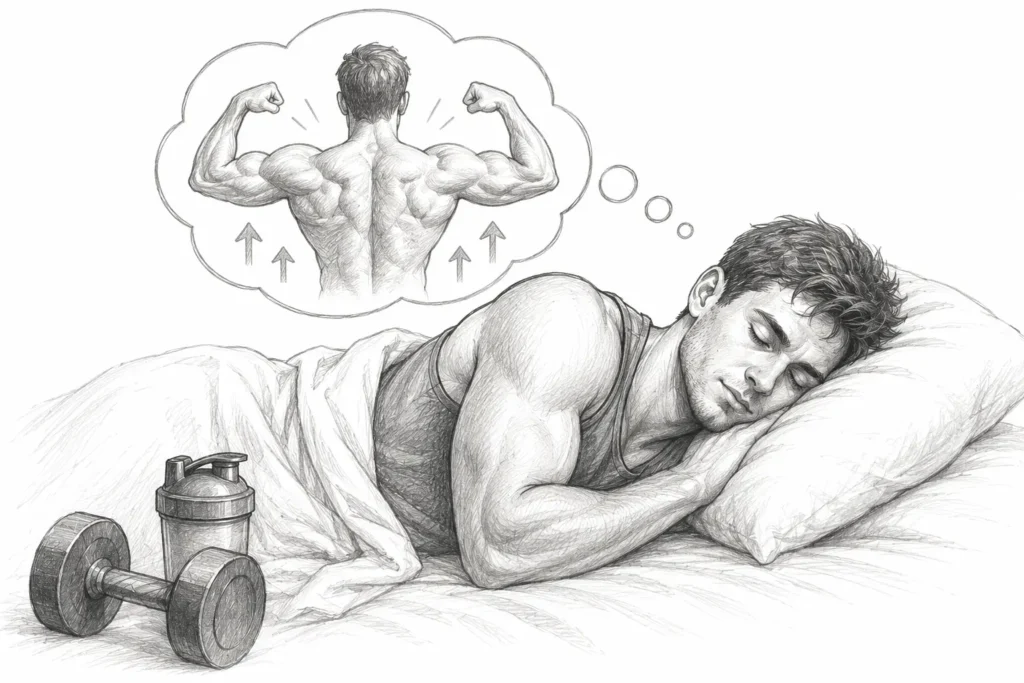
This is one of the most misunderstood parts of training. Lifting weights does not directly build muscle. It creates the stimulus, and the actual growth happens afterward.
NASM has explained that active recovery works by increasing blood flow, which helps carry oxygen and nutrients to tissues while clearing out cellular waste built up during exercise, supporting faster healing than sitting completely still would. Whether you choose active or passive recovery, the actual rebuilding process depends on giving your body a break from added stress.
| Phase | What Happens |
|---|---|
| During the workout | Muscle fibers experience small tears and fatigue |
| Hours after training | Inflammation and repair processes begin |
| One to two days later | Muscle protein synthesis peaks, rebuilding tissue stronger |
| Beyond 48 hours | Muscle fully adapts if recovery has been adequate |
Skipping recovery does not skip this process. It interrupts it, which means the muscle never quite finishes rebuilding before the next hard session adds more stress on top.
The Difference Between Normal Fatigue and Overtraining Syndrome
Feeling tired after a hard week of training is normal. Overtraining syndrome is a different, more serious problem that does not resolve with a single rest day.
| Normal Training Fatigue | Overtraining Syndrome |
|---|---|
| Improves within a day or two of rest | Persists for weeks, sometimes months |
| Soreness fades with light movement | Soreness and fatigue remain despite rest |
| Performance dips briefly, then recovers | Performance keeps declining over time |
| Mood stays generally stable | Mood, sleep, and motivation are all affected |
Cleveland Clinic describes overtraining syndrome as a condition that develops when someone trains too often or too intensely for long enough that it starts affecting the body physically and emotionally, and notes that recovery from full overtraining syndrome can take anywhere from a few weeks to several months. This is a completely different situation than ordinary post-workout tiredness, and confusing the two often leads people to push through symptoms that actually need real rest.
Early Warning Signs Worth Paying Attention To
Catching the early signs of overtraining is far easier than recovering from the full condition later.
- A resting heart rate that stays higher than usual for several mornings in a row
- Trouble sleeping despite feeling physically exhausted
- Motivation dropping even for workouts you normally enjoy
- Getting sick more often than usual
- Small aches that do not fully resolve between sessions
Mayo Clinic Health System has pointed out that persistent pain, unusual fatigue, and a sudden dip in performance are worth paying attention to, recommending an extra rest day or a period of reduced training intensity before symptoms get worse.
How Many Recovery Days You Actually Need Recovery Days Matter
Recovery needs shift depending on training style, intensity, and experience level, but general guidelines help most people find a reasonable starting point.
| Training Style | Suggested Rest Approach |
|---|---|
| Beginner strength training | At least one full rest day between sessions for the same muscle group |
| Intermediate to advanced lifting | 48 hours minimum before training the same muscle group again |
| High-intensity interval training | One to two full rest or active recovery days per week |
| Endurance training | Built-in easy weeks every few weeks, plus regular rest days |
Research on athletes documented in the National Institutes of Health’s PMC database has described how overtraining syndrome develops when rest fails to match the demands of intense training, reinforcing that recovery needs generally scale up alongside training intensity rather than staying fixed no matter how hard someone trains.
Active Recovery Versus Complete Rest: Which Is Better

Both approaches have a place, and the right choice depends on how your body feels on a given day.
- Active recovery works well when you feel generally fine but slightly stiff or sluggish
- Complete rest works better after an especially intense training block or when fatigue feels deeper than usual
- Mixing both throughout a week tends to work better than relying entirely on one approach
- Listening to how your body responds after each type of recovery day helps you figure out what actually works for you
A hospital-based wellness team at UCHealth has noted that recovery allows the body to repair and rebuild muscles, tendons, and ligaments, and that this repair process is what actually produces gains in fitness over time, not the workout itself. This applies whether the recovery day involves total rest or gentle movement, as long as the intensity stays low enough to allow real repair.
Common Mistakes People Make With Recovery Days
A handful of habits quietly turn a recovery day into another stressful workout in disguise.
- Turning an easy recovery walk into an accidental cardio session
- Feeling guilty for resting and compensating by training harder the next day
- Ignoring persistent soreness and training through it anyway
- Treating recovery days as an excuse to eat poorly, which slows the repair process
- Skipping sleep on rest days, assuming the lack of training alone is enough
- Comparing your recovery needs to someone else’s without accounting for differences in training intensity or experience
- Assuming a rest day has to look identical every week, rather than adjusting based on how the previous week actually felt
Fixing even one or two of these mistakes tends to improve how a person feels within a week or two, often before any changes show up in strength numbers. Small adjustments to how recovery days are actually spent usually matter more than adding extra rest days on top of an already reasonable schedule. Most people do not need more days off, they just need to use the days they already have more wisely.
Warning Signs Your Body Needs More Rest
Beyond the early signs of overtraining, a few clearer signals suggest it is time to prioritize recovery immediately rather than pushing through.
- A noticeable, unexplained drop in strength across multiple sessions
- Persistent joint pain that does not improve with normal rest
- Feeling emotionally flat or unusually irritable around training
- Getting injured more often than usual during normal workouts
- Feeling like workouts require more effort than usual just to complete
- Waking up feeling as tired as when you went to bed, despite a full night of sleep
None of these signs mean training was wasted. They mean the body is asking for a pause before continuing forward, and listening early usually prevents a much longer setback later. A short pause now is almost always cheaper than the weeks lost to a real injury or a full case of overtraining syndrome later.
How Recovery Affects Strength, Not Just Soreness
People often connect recovery only to soreness, but its effect on actual strength and performance is just as important.
- Strength gains depend on full recovery between sessions targeting the same muscle group
- Poor recovery leads to weaker, less consistent performance across a training week
- Consistent recovery habits tend to produce steadier long-term strength gains than aggressive training with minimal rest
- Athletes who prioritize recovery often see better results with less total training volume than those who train constantly without adequate rest
This is one of the more counterintuitive lessons in fitness. More training without matching recovery does not produce more results, it usually produces a plateau followed by a slow decline.
A useful way to think about this is treating recovery as part of the training program itself, not something separate from it. A week that includes four hard sessions and three properly used rest days is not a week with three wasted days. It is a complete training cycle where every part serves a purpose.
Recovery and FFMI: Why Skipping Rest Can Hide Real Progress
Poor recovery does not just make you feel tired. It can quietly stall the very muscle gains you are training so hard for, even while you keep showing up to every session.
This connects directly to something we track closely at FFMI Calculator. If your fat free mass index stalls despite consistent training, inadequate recovery is one of the first things worth checking, especially if training frequency has crept up while rest days have quietly disappeared.
Checking your FFMI every few weeks alongside your recovery habits gives a much clearer picture of what is actually happening. A lifter who respects recovery days will often see steadier lean mass progress than one who trains constantly but never lets the body finish repairing itself. Over several months, this steadier approach tends to add up to more real muscle than a schedule built entirely around pushing harder every single session.
A Simple Recovery Day Routine
This routine works well for most people training regularly, whether the day includes light movement or full rest.
- Get up around your normal time to keep your sleep schedule consistent
- Choose either full rest or light movement, such as a twenty to thirty minute walk
- Stretch gently if muscles feel tight, without pushing into pain
- Eat normally, with attention to protein intake to support repair
- Prioritize a full night of sleep, since this is when a large portion of physical recovery actually happens
None of this needs to feel complicated. The goal of a recovery day is simply to let your body finish the work your training started, not to add another layer of stress on top of it.
Some people find it helpful to plan recovery days on the calendar just like training days, rather than deciding at the last minute based on how motivated they feel. Treating rest as a scheduled part of the week, not an afterthought, tends to make it far easier to actually follow through on.
Foods and Habits That Support Recovery
What you do around your recovery day has a real effect on how well your body actually uses that rest.
- Eating enough protein throughout the day to support ongoing muscle repair
- Staying hydrated, since dehydration can make muscles feel stiffer and slower to recover
- Limiting alcohol on recovery days, since it can interfere with sleep quality and repair processes
- Managing stress where possible, since chronic stress can work against the body’s recovery efforts
- Keeping a consistent bedtime, even on days without training
- Giving yourself permission to genuinely relax mentally, not just physically, on full rest days
None of these habits guarantee a perfect recovery every time, but together they remove a lot of the common reasons people feel like their rest days are not actually helping. Most people only need to fix a couple of these to notice their recovery days start paying off in how they feel during the next hard session.
FAQs
How many rest days do I actually need each week?
Ans: Most people training regularly benefit from at least one to two full rest or active recovery days per week, though this can shift based on training intensity and experience level.
Is it bad to do light exercise on a rest day?
Ans: No, light movement like walking or gentle stretching is often considered active recovery and can support blood flow and reduce stiffness, as long as the intensity stays low.
How do I know if I am overtraining instead of just tired?
Ans: Normal fatigue usually improves within a day or two of rest, while overtraining symptoms like persistent exhaustion, poor sleep, and declining performance tend to linger despite rest.
Can skipping rest days actually slow down muscle growth?
Ans: Yes, muscle repair and growth happen primarily during rest, so consistently skipping recovery can interrupt this process and slow overall progress.
Should I take a rest day even if I do not feel sore?
Ans: Yes, soreness is not the only sign your body needs recovery. Nervous system fatigue and hormonal balance also need time to reset, even without noticeable soreness.
Is active recovery better than complete rest?
Ans: Neither is universally better. Active recovery works well for mild stiffness, while complete rest tends to suit deeper fatigue or after an especially demanding training period.
Can poor recovery affect my FFMI even if I am training hard?
Ans: Yes, inadequate recovery can stall lean muscle progress despite consistent training, which is why tracking your fat free mass index alongside your recovery habits can reveal issues that training logs alone might miss.
Do rest days affect motivation as much as they affect the body?
Ans: Yes, mental fatigue builds up alongside physical fatigue, and a properly used rest day often restores enthusiasm for training just as much as it restores muscle and energy levels.