

Most people think fat loss needs sweat, pain, and an hour at the gym. That belief stops a lot of people before they even start. But How Daily Walking Supports Fat Loss Without Hard Workouts something you already know how to do, can quietly do more for your body than a workout you dread and skip.
At FFMI Calculator, we talk to people every week who feel stuck. They tried hard programs, burned out, and gained the weight back. Walking is the one habit that almost never gets this reaction. It is slow, it is boring to some, and that is exactly why it works so well over time.
This article breaks down why walking helps with fat loss, how much you actually need, what mistakes to avoid, and how to build a walking habit that fits into a normal, busy life. No gym membership required.
We are not saying gym workouts or running are bad. They have real benefits of their own. The point here is simpler: if hard workouts have not worked for you so far, walking gives you a realistic starting point that does not depend on motivation lasting forever.
Why Walking Deserves More Credit Than It Gets
People chase hard workouts because they feel productive. Sweat feels like proof. But feeling wrecked after a workout is not the same as burning fat, and it is not the same as building a habit you can repeat for years.
The Problem With Chasing Hard Workouts Only
Intense workouts have a place, but relying on them alone creates a cycle that many people know too well.
- Soreness makes people skip the next two or three days
- Motivation drops once the first excitement fades
- Injuries from jumping into intense training too fast
- Hunger spikes after very hard sessions, which can undo the calorie deficit
- Life gets busy and a one hour workout feels impossible to fit in
Walking removes almost every one of these problems. Mayo Clinic explains that adding half an hour of brisk walking to your day can burn roughly 150 extra calories, and you can do it again tomorrow without needing recovery time.
What Makes Walking Different
Walking works because it does not fight your body. It fits into a normal day, and it does not leave you so tired that you skip meals or crash on the couch for the rest of the evening.
| Feature | Walking | Intense Gym Workout |
|---|---|---|
| Recovery time needed | None | 24 to 48 hours |
| Injury risk | Very low | Moderate to high |
| Cost | Free | Often requires membership |
| Daily repeatable | Yes | Rarely |
| Appetite effect | Mild, controlled | Often increases hunger sharply |
Walking is not a replacement for strength training if your goal is building muscle. But for steady fat loss, it removes the biggest reason people fail: quitting.
The Real Science of How Walking Burns Fat , Explained Simply
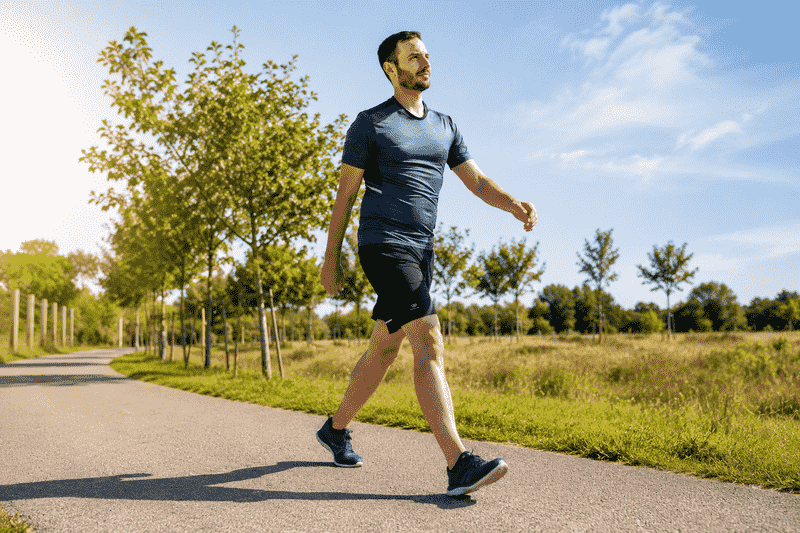
Fat loss comes down to using more energy than you take in. Walking helps on both sides of that equation, and the effect adds up quietly across weeks and months.
Calories In, Calories Out, Made Simple
Your body needs energy for everything: breathing, digestion, thinking, and moving. When you burn slightly more than you eat, your body pulls from stored fat to make up the difference.
Walking adds a small but steady calorie burn without draining you the way hard training does. Mayo Clinic points out that physical activity like walking plays a real role in weight control simply because it burns calories, and the effect grows the longer and faster you walk.
What Is NEAT and Why It Matters More Than People Realize
NEAT stands for non-exercise activity thermogenesis. It sounds technical, but it is simply every calorie your body burns outside of formal exercise. Cleveland Clinic describes NEAT as covering the everyday movement that is not technically a workout, from daily chores to plain fidgeting, but still uses up real energy.
Walking sits right in the middle of NEAT and light exercise. Small daily activities like these add up fast:
- Taking the stairs instead of the elevator
- Parking farther from the store entrance
- Walking during phone calls
- Pacing while waiting for the kettle to boil
- Getting up every hour at a desk job
None of these feel like a workout, yet they can burn hundreds of extra calories across a day.
How Many Steps You Actually Need for Fat Loss
You do not need 10,000 steps to see results. That number came from an old Japanese marketing campaign, not a strict medical rule.
| Daily Step Range | What It Generally Supports |
|---|---|
| 4,000 to 6,000 | Basic movement, better than sitting all day |
| 7,000 to 8,000 | Solid health benefits, supports weight management |
| 8,000 to 10,000 | Noticeable fat loss support when paired with a mild calorie deficit |
| 10,000 to 12,000 | Stronger results, but with smaller added benefit past this point |
A Cleveland Clinic exercise physiologist has pointed out that being consistently active matters more than hitting one perfect number, and that the real benefit comes from simply moving more than your current baseline. Medical News Today has also covered NHS guidance suggesting a walking pace where talking still feels easy but singing does not, which is a simple way to judge whether a walk counts as brisk enough to help with fat loss.
Why 10,000 Steps Is Not a Magic Number
If you currently walk 3,000 steps a day, jumping straight to 10,000 might feel impossible and lead to quitting within a week. A smaller jump, like adding 2,000 steps, is easier to keep up and still produces real results over time.
Daily Walking Supports Fat Loss Versus Running Versus Gym Workouts for Fat Loss
People often assume harder always means better. For fat loss specifically, that is not always true.
| Activity | Calories Burned Per 30 Minutes (Average) | Joint Stress | Beginner Friendly |
|---|---|---|---|
| Walking (brisk pace) | 130 to 200 | Very low | Yes |
| Jogging | 250 to 350 | Moderate to high | Sometimes |
| Gym weight training | 150 to 250 | Low to moderate | Depends on form |
| High intensity interval training | 300 to 400 | High | No |
Running and gym training can burn more calories per session, but walking wins on one thing that matters more than any single number: you can do it every single day without breaking down.
The Best Time of Day to Walk for Fat Loss
Timing matters less than people think, but each option has its own small advantage worth knowing about.
Morning Walks
Walking before breakfast can help set a calm tone for the day and gets movement done before life gets in the way.
After Meal Walks
A short walk after eating, even ten minutes, helps the body handle blood sugar better and can reduce the sluggish feeling that follows a big meal.
Evening Walks
Walking after dinner or before bed can help some people wind down, though it is worth avoiding a very brisk pace too close to sleep if it leaves you feeling wired.
- Morning walks build consistency before the day gets busy
- After meal walks support digestion and steadier energy
- Evening walks work well for people who feel too rushed earlier in the day
Pick the time you can actually stick with. The best walking time is the one that survives a busy Tuesday, not just a relaxed Sunday.
How Walking Controls Hunger and Appetite
One reason walking works so well for fat loss is that it rarely triggers the intense hunger that comes after a hard workout. Harvard Health has covered research showing that a short fifteen minute walk can ease chocolate cravings and cut down how much is eaten during stressful moments.
This matters because a calorie deficit only works if you do not eat back everything you burned. Gentle movement tends to keep appetite steady instead of spiking it, which is one quiet advantage walking has over harder training sessions.
Common Mistakes People Make When Walking for Weight Loss
Even a simple habit can be done in ways that quietly slow down results. Watch for these patterns.
- Walking too slowly to count as real effort, more of a stroll than a workout
- Expecting fast results within a week or two
- Ignoring food intake and assuming walking alone will fix everything
- Wearing the wrong shoes and dealing with foot or knee pain
- Skipping days after a bad night’s sleep instead of just walking slower
- Comparing step counts to other people instead of your own starting point
- Stopping the moment the scale does not move, without checking waist size or clothing fit
Fixing even two or three of these mistakes often makes a bigger difference than adding more workouts on top of an already tiring schedule.
A smaller mistake worth mentioning is treating every walk the same way. A slow stroll with the family after dinner is good for connection and light digestion, but it should not be counted the same way as a brisk, heart rate raising walk done for fat loss purposes. Knowing the difference helps you plan your week honestly instead of assuming any walk automatically covers your activity goal.
Walking Outdoors Versus Walking on a Treadmill
Both options work, and the right choice usually comes down to personal preference and what keeps you consistent.
- Outdoor walking often feels less repetitive since scenery changes
- Weather can interrupt outdoor routines, which a treadmill avoids
- Treadmills let you control incline and pace precisely
- Walking outside adds light exposure, which can support better sleep at night
- Uneven ground outdoors can lightly challenge balance and stability
Neither option beats the other for fat loss on its own. What matters is picking the one you will actually use on a rainy Tuesday or a tired Thursday evening, since the walk that happens is always more useful than the perfect walk that gets skipped.
How to Track Progress Without Obsessing Over the Scale
The scale reacts to water, sodium, hormones, and stress, not just fat. Relying on it alone leads to frustration that has nothing to do with real progress.
Better ways to track fat loss progress include:
- Waist measurement taken weekly, same time of day
- Progress photos in the same lighting and clothing
- How clothes fit around the waist and hips
- Energy levels and sleep quality
- Resting heart rate trends over weeks
Why Body Composition Beats Body Weight
Two people at the same weight can look completely different depending on how much muscle they carry. This is where tools like a fat free mass index calculator become useful, since they look at lean mass instead of just a number on the scale.
Tracking fat free mass alongside body weight gives a clearer picture of whether you are losing fat, losing muscle, or both. Many people walking for fat loss are surprised to see their FFMI stay steady even while their weight drops, which usually means the loss is coming from fat rather than muscle.
Walking and Muscle: Why This Balance Matters
Walking on its own does not build significant muscle the way resistance training does, but it also does not eat away at muscle the way extreme calorie cutting can.
| Approach | Effect on Fat | Effect on Muscle |
|---|---|---|
| Walking only | Gradual fat loss | Muscle mostly maintained |
| Walking plus strength training | Faster fat loss | Muscle maintained or increased |
| Extreme dieting without movement | Fast weight loss | Muscle loss is common |
A study cited by a walking research review found that a combination of moderate walking with a controlled calorie intake led to greater fat loss while preserving lean muscle compared to dieting alone. This is exactly why pairing daily steps with two or three short strength sessions a week gives better long term shape, not just a lower number on the scale.
A Simple Weekly Walking Plan for Fat Loss
This plan works for a normal week with a job, family, or school schedule. Adjust pace and time based on your current fitness level.
| Day | Walk Type | Duration |
|---|---|---|
| Monday | Brisk morning walk | 30 minutes |
| Tuesday | After dinner walk | 20 minutes |
| Wednesday | Brisk walk with light incline | 30 minutes |
| Thursday | Two short walks (morning and lunch) | 15 minutes each |
| Friday | Relaxed walk, any pace | 25 minutes |
| Saturday | Longer walk outdoors | 45 minutes |
| Sunday | Rest or a gentle stroll | 15 minutes optional |
The CDC’s current activity guidelines call for around 150 minutes of moderate intensity movement, like brisk walking, spread across a normal week, and this plan lands close to that target while leaving room for rest.
Easy Ways to Add More Walking Into a Busy Day

You do not need a dedicated hour if your schedule is packed. Small additions throughout the day work just as well.
- Take phone calls standing up or walking around the room
- Walk to a coworker’s desk instead of messaging them
- Get off public transport one stop earlier
- Walk the dog a longer route than usual
- Do a lap around the block before checking your phone in the morning
- Set a reminder to stand and move every hour during desk work
None of these feel like exercise, which is exactly why people actually stick with them.
What Trainers Say About Walking for Fat Loss
Certified trainers who work with beginners often point to walking as the first tool they recommend, not the last resort. A certified personal trainer writing for NASM has called walking one of the most undervalued tools in fitness, noting that it supports appetite control, circulation, and recovery from harder workouts, all while being safe enough for almost anyone to start immediately.
A Cleveland Clinic exercise physiologist has made a similar point, explaining that the biggest barrier for most people is simply getting motivated to start, and that walking removes that barrier because it is something almost everyone already knows how to do without any learning curve.
The common thread in this advice is simple: walking is not the backup plan for people who cannot handle real exercise. It is often the smartest starting point, and for many people, it stays part of their routine even after they add other training.
Foods and Habits That Work Well Alongside a Walking Routine

Walking supports fat loss best when paired with a few simple habits around food and daily routine.
- Protein at each meal to support muscle while in a calorie deficit
- Drinking water before meals, since thirst is often mistaken for hunger
- Avoiding liquid calories like sugary drinks that add up fast
- Getting enough sleep, since poor sleep increases hunger hormones
- Keeping a rough eye on portion sizes rather than strict calorie counting for everyone
- Eating a small amount of fiber and protein before an evening walk if hunger tends to strike late at night
- Stretching the calves and feet lightly after long walks to avoid stiffness the next morning
- Choosing supportive shoes over fashion, since foot pain quietly ends more walking routines than laziness ever does
None of these habits need to be perfect. A person who walks daily and eats reasonably well most of the time will usually outperform someone chasing a flawless plan for two weeks before burning out.
The National Institute of Diabetes and Digestive and Kidney Diseases notes that pairing a healthy eating plan with more physical activity is what helps people reach and hold onto a healthy weight, which lines up with what most walking based fat loss plans look like in practice.
FAQs
Does walking alone burn belly fat specifically?
Ans: Walking helps reduce overall body fat, and belly fat tends to respond well to consistent activity over time. There is no way to target fat loss in one specific spot, but total body fat reduction usually includes the midsection.
How long before I see results from walking every day?
Ans: Most people notice changes in energy and clothing fit within three to four weeks. Visible fat loss often takes six to eight weeks of consistent walking paired with reasonable eating habits.
Is walking after meals better than walking in the morning?
Ans: Both offer benefits. After meal walks help with blood sugar and digestion, while morning walks help build a consistent habit before the day gets busy. Pick whichever one you can repeat daily.
Can I lose weight by walking without changing my diet?
Ans: Some people see mild results, but most research shows the biggest changes happen when walking is paired with attention to food intake. Walking burns calories, but diet controls the bigger share of the equation.
What pace counts as brisk walking for fat loss?
Ans: A pace where talking is still comfortable but singing feels difficult is generally considered brisk. This usually means walking fast enough to notice your heart rate rise slightly.
Should I check my FFMI while trying to lose fat through walking?
Ans: Yes, checking your fat free mass index every few weeks can show whether your progress is coming from fat loss or muscle loss, which gives a much clearer picture than the scale alone.
Do I need a fitness tracker to make walking work?
Ans: No, a tracker helps with motivation and consistency, but a regular watch or even just a set walking route can work just as well if you are consistent about it.
What if I have knee or joint pain, can I still walk for fat loss?
Ans: Walking is usually gentler on joints than running, but pain should never be pushed through. Shorter, slower walks on flat ground are often a safer starting point, and checking with a doctor first is a reasonable step if pain has been ongoing.