
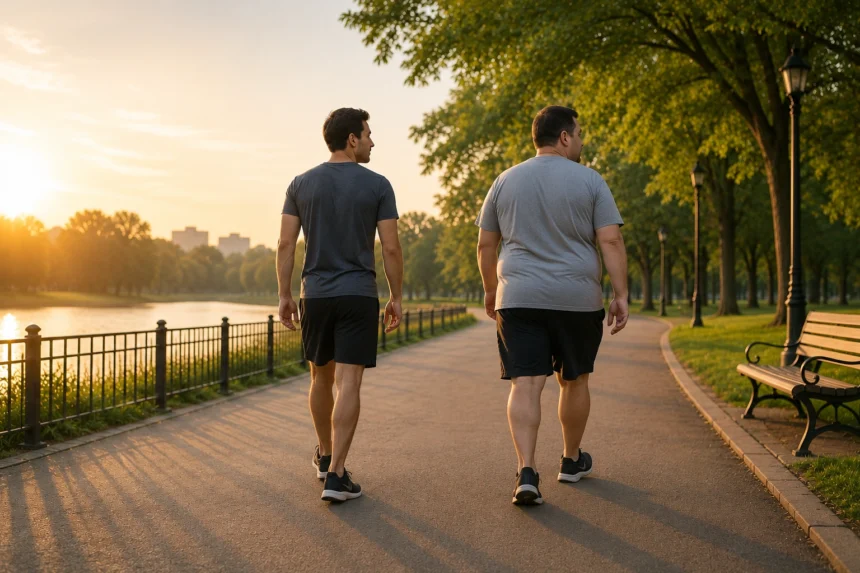
Walking doesn’t get that kind of respect, yet it’s one of the most reliable tools for losing fat that actually sticks around. This guide breaks down why walking works, how much you actually need, common mistakes, and how to track progress properly. We put this together with the same mindset behind our ffmi calculator tool: real numbers, real context, no fluff.
Why Walking Works For Fat Loss

Fat loss comes down to a simple math problem over time: your body needs to burn more energy than it takes in. Walking helps on both sides of that equation without wrecking your joints or draining your motivation.
Daily Walking Supports A thirty minute walk burns real calories, and the number adds up fast across a week. More importantly, walking barely raises stress hormones the way intense training can, so it doesn’t trigger the same hunger rebound that leaves people raiding the fridge an hour later.
Walking also keeps insulin sensitivity in check. When muscles contract during movement, they pull glucose out of the bloodstream without needing much insulin, which helps the body use energy more efficiently over time. The Harvard T.H. Chan School of Public Health has pointed out that regular moderate activity, including walking, plays a measurable role in weight management and metabolic health.
| Why Walking Helps | What It Does In The Body |
|---|---|
| Burns steady calories | Adds up across the day without heavy fatigue |
| Improves insulin sensitivity | Muscles use blood sugar more efficiently |
| Lowers cortisol compared to intense training | Less stress-driven hunger and cravings |
| Easy on joints | Sustainable long term without injury setbacks |
How Many Steps Actually Move The Needle
The old “10,000 steps a day” number gets thrown around constantly, but it didn’t come from a research study. It came from a Japanese pedometer marketing campaign in the 1960s. That doesn’t mean the number is useless, but it’s not some magic finish line either.
Research has shown real health benefits start showing up at lower step counts than people assume. A large study published through Harvard researchers and covered by Harvard Health Publishing found that older women who walked around 4,400 steps a day had notably lower mortality rates compared to those walking under 2,700, and benefits kept increasing up to about 7,500 steps before leveling off.
For fat loss specifically, the sweet spot for most beginners tends to sit between 7,000 and 10,000 steps daily, though anyone starting from a mostly sitting lifestyle will see real changes even from 5,000.
| Daily Step Count | Rough Category |
|---|---|
| Under 5,000 | Sedentary lifestyle |
| 5,000 to 7,499 | Low active |
| 7,500 to 9,999 | Somewhat active |
| 10,000 and above | Active |
How Walking Compares To Harder Workouts
People assume harder always means better, but that’s not the full story for fat loss. Here’s an honest comparison.
Walking burns moderate calories per session, is easy to recover from, rarely causes injury, and can be done daily without burnout.
High intensity training burns more calories per minute, but requires longer recovery, carries higher injury risk for beginners, and often can’t be repeated daily without overtraining.
A physical therapist we spoke with while writing this piece said something worth remembering: “The best workout is the one you’ll actually repeat for six months. I’ve seen more people lose fat from walking every single day than from a gym program they quit after three weeks.”
This doesn’t mean strength training or cardio intervals are bad. They build muscle, improve cardiovascular fitness, and speed up certain results. But walking fills the gap that hard workouts leave empty: daily consistency without burnout.
Common Mistakes People Make With Walking For Fat Loss
We see the same patterns show up again and again with people trying to use walking as a fat loss tool.
- Walking fast enough to feel out of breath, then quitting because it feels like a chore
- Expecting the scale to move daily instead of tracking weekly trends
- Undoing the walk with a large snack “reward” that outweighs the calories burned
- Only walking on weekends instead of spreading movement across the whole week
- Ignoring posture and just shuffling along, which reduces the actual muscle engagement
- Ignoring diet completely and assuming walking alone will fix everything regardless of what’s eaten
That last point matters the most. Walking supports fat loss, but it works alongside food choices, not instead of them. A twenty minute walk burns roughly 100 calories for most adults, and a single sugary drink can undo that in seconds.
How Long And How Often
There’s no single perfect number, but here’s a realistic breakdown based on what tends to work for most people trying to lose fat through walking.
| Goal | Suggested Walking Routine |
|---|---|
| General health maintenance | 20 to 30 minutes daily |
| Steady fat loss | 30 to 45 minutes daily, five to six days a week |
| Faster fat loss alongside diet changes | 45 to 60 minutes daily, broken into two sessions if needed |
Splitting walks into smaller chunks works just as well as one long session. A fifteen minute walk after breakfast and another after dinner adds up to the same benefit as thirty minutes straight, and for a lot of people it’s easier to fit into a busy schedule.
Walking Speed Actually Matters
Not all walking pace burns the same. A slow stroll through a store is barely more active than standing still. A brisk walk where you can talk but not sing comfortably puts you in a much better calorie-burning zone.
Slow pace feels like a casual walk with no elevated breathing.
Moderate pace raises your heart rate noticeably, you can talk in full sentences but not sing.
Brisk pace makes conversation a bit harder, you’re breathing more heavily but not gasping.
For fat loss purposes, moderate to brisk pace gives the best return on time invested. The Centers for Disease Control and Prevention classifies brisk walking as moderate intensity activity, and recommends adults get at least 150 minutes of moderate activity weekly for meaningful health benefits.
Adding Small Challenges Without Turning It Into A Hard Workout
You don’t need to sprint to make walking more effective. Small adjustments raise the calorie burn without turning a gentle walk into an exhausting session.
- Add gentle inclines or hills when available, since uphill walking recruits more muscle
- Carry light hand weights occasionally, though this shouldn’t replace proper strength training
- Walk right after meals, which also helps blunt blood sugar spikes
- Pick up the pace for short bursts, then return to normal speed, without needing a formal interval structure
- Walk outdoors when possible, since uneven terrain slightly increases effort compared to flat treadmill walking
None of these need to happen every single walk. Mixing them in occasionally keeps things interesting and slightly increases the calorie burn without adding real strain.
How Walking Affects Appetite
One underrated benefit of walking is how it interacts with hunger signals. Intense exercise sometimes spikes appetite hard enough that people eat back more calories than they burned. Walking tends to have the opposite effect for a lot of people, keeping appetite steady or even slightly reducing cravings for high sugar foods.
A registered dietitian we consulted for this piece explained it this way: “Clients who add a daily walk, especially after meals, often tell me their sugar cravings calm down within a couple weeks. It’s not magic, it’s just steadier blood sugar and lower stress hormones.”
This effect varies from person to person, but it’s a real pattern worth paying attention to, especially for anyone who struggles with intense workouts triggering overeating afterward.
Tracking Progress The Right Way

The scale alone tells an incomplete story, especially with a slow and steady method like walking. Here’s what actually gives a clearer picture over weeks and months.
Body measurements around the waist, hips, and thighs often shift before the scale does. Progress photos taken every few weeks under the same lighting show changes that numbers alone miss. How clothes fit tends to be one of the most honest indicators, since fabric doesn’t lie the way water retention can trick a scale reading.
For anyone also working on muscle and body composition alongside fat loss, pairing step tracking with a body composition tool, like our ffmi calculator, gives a fuller picture than the scale by itself. Fat loss and muscle changes often happen at the same time, and a single number on a scale can hide real progress happening underneath.
A Realistic Example
Take a 41 year old office worker who starts with roughly 3,500 steps a day, mostly from walking to the car and around the house. In week one, she adds a fifteen minute walk after dinner, bringing her to around 5,500 steps.
By week four, she adds a morning walk too, landing around 8,000 steps daily. By month three, with modest changes to snacking habits alongside the walking routine, she notices her jeans fitting looser and the scale down a few pounds, even though she never ran a single step or joined a gym.
This kind of slow, steady change is far more common than dramatic before-and-after transformations, and it’s also far more likely to stick around long term.
Does Walking Alone Build Any Muscle
Walking mostly targets the legs and core to a small degree, but it isn’t a strong muscle-building activity on its own. It won’t replace strength training if building muscle is a specific goal. That said, walking supports fat loss while preserving the muscle you already have, especially when paired with enough protein in the diet.
The Cleveland Clinic notes that walking supports cardiovascular health, joint mobility, and mood, alongside its role in weight management, even though it isn’t classified as a strength-focused activity.
For anyone wanting both fat loss and muscle maintenance, a combination of daily walking plus two or three short strength sessions a week tends to outperform either one alone.
Weather And Motivation Problems
Bad weather and low motivation kill more walking routines than actual physical limitations. A few practical fixes solve most of these issues.
Treadmill walking works just as well as outdoor walking for calorie burn, and it removes the weather excuse entirely. Walking indoors at a mall, an indoor track, or even pacing during phone calls adds up over a week. Setting a recurring reminder on your phone helps more than relying on willpower alone, especially in the first few weeks before it becomes an actual habit.
According to guidance from Johns Hopkins Medicine, building a walking habit around a consistent daily trigger, like right after breakfast or right after work, tends to stick far better than trying to squeeze in a walk whenever there happens to be free time.
FAQs
How many steps a day are needed for fat loss? Most people see real progress somewhere between 7,000 and 10,000 steps daily, though even 5,000 steps a day marks a big improvement for someone starting from a mostly sedentary lifestyle.
Can walking alone lead to noticeable fat loss without dieting? Yes, though results are usually slower without diet changes. Walking burns calories and supports metabolism, but pairing it with reasonable eating habits speeds up results significantly.
Is walking after meals better than walking any other time? Walking after meals helps blunt blood sugar spikes and supports digestion, making it a smart timing choice, though total daily walking still matters more than the exact timing.
How fast should I walk for fat loss? A brisk pace, where talking is possible but singing isn’t, tends to give the best results for fat loss compared to a slow, casual stroll.
Will walking make my legs bulky? No. Walking is far too low intensity to build significant muscle bulk. It tones and supports muscle rather than adding noticeable size.
How long before I see results from daily walking? Most people notice changes in energy and clothing fit within three to four weeks, with more visible fat loss changes typically showing up around the two to three month mark.
Is it better to walk once for a long time or split it into shorter walks? Both work equally well for total calorie burn. Splitting walks into two or three shorter sessions often fits better into a busy schedule without losing any benefit.
Do I need a fitness tracker to make walking effective for fat loss? Not strictly, but tracking steps or time helps with consistency and motivation. A basic phone app or simple pedometer works just as well as an expensive fitness watch for this purpose.