
You can have a perfect training program and still have a terrible workout simply because you walked into the gym slightly dehydrated. Most people never connect the dots, blaming poor sleep, low motivation, or a bad program instead.
At FFMI Calculator, we see this pattern often. Someone tracks calories and protein carefully, follows a solid lifting plan, and still hits unexplained flat days where strength and energy both disappear. Hydration is one of the first things worth checking, because even mild fluid loss can quietly take the edge off a workout before you notice you are thirsty. It is one of the simplest variables to fix, yet one of the most commonly overlooked.
Hydration Affects Energy Strength this article explains what water actually does for your muscles and energy levels, how much dehydration it takes to hurt performance, and how to build a simple hydration routine that supports real training results without turning it into a complicated science project. By the end, hydration should feel like one of the easiest wins available in your training plan.
We are writing this because hydration is one of the easiest things to fix once someone actually notices it is the problem. Unlike a training program overhaul or a diet rework, adjusting how and when you drink water can show results within days, not weeks.
Why Hydration Gets Overlooked in Most Training Plans
Food and workouts get planned in advance. Water usually does not, and that gap causes more performance problems than people realize.
The Sneaky Way Mild Dehydration Shows Up
Dehydration rarely announces itself clearly during a workout. It shows up as a collection of small, easy-to-dismiss symptoms instead.
- Feeling tired earlier than usual during a session
- Needing more mental effort just to push through normal sets
- Muscles cramping in ways that feel unrelated to the exercise itself
- A workout that objectively looks the same on paper but feels much harder than usual
Most people blame these feelings on sleep, stress, or motivation, when a quick look at how much water they drank that day often explains a lot of it. Keeping a rough mental note of fluid intake for a few days is often enough to spot the pattern.
What Water Actually Does Inside Your Body During Exercise
Water is involved in almost every system your body relies on during a workout, not just sweating.
| Function | Role During Exercise |
|---|---|
| Blood volume | Carries oxygen and nutrients to working muscles |
| Temperature control | Allows sweating to cool the body during effort |
| Joint lubrication | Cushions joints during repeated movement |
| Nutrient transport | Moves carbohydrates and electrolytes to muscle cells |
| Waste removal | Clears metabolic byproducts produced during exercise |
Mayo Clinic has noted that the body needs water to help the brain and body function properly, including supporting movement, mood, and energy levels. This is one reason hydration affects far more than just how thirsty you feel. It touches nearly every system involved in producing a strong, focused, well-executed workout.
How Even Mild Dehydration Hurts Strength and Power
This is where hydration stops being a minor detail and starts directly affecting workout quality.
| Body Weight Fluid Loss | Typical Effect on Performance |
|---|---|
| 1 percent | Minimal effect for most people |
| 2 percent | Noticeable decline in endurance performance begins |
| 3 to 4 percent | Strength, power, and endurance all start to suffer |
| 4 to 7 percent | Significant performance decline across nearly all exercise types |
A review published through the National Institutes of Health’s PMC database found that dehydration exceeding roughly 2 percent of body weight consistently impairs endurance exercise performance, with performance declining further as fluid loss increases toward the 4 to 7 percent range. A separate study covered in fitness research circles found that dehydration also hurts anaerobic performance, the kind involved in weightlifting and short, intense efforts, not just endurance activities.
Why Strength Training Is Not Immune to Dehydration
People sometimes assume hydration only matters for runners or endurance athletes. Lifting weights is not exempt from these effects.
- Reduced blood volume from dehydration makes it harder to carry oxygen and nutrients during heavy sets
- Dehydrated muscle tissue can lose some of its ability to produce maximum force
- Cramping becomes more likely during heavy, demanding lifts when fluid levels are low
- Recovery between sets can feel harder and take longer when hydration is poor
Hydration and Energy: Why You Feel Tired Before You Feel Thirsty
Thirst is a delayed signal. By the time you feel thirsty, mild dehydration has usually already started affecting how you feel and perform.
Mayo Clinic has pointed out that even mild dehydration can make people feel like they have less energy and can make it harder to think clearly, which explains why a workout can feel mentally foggy and physically flat on days when fluid intake has been low, even without obvious thirst.
- Energy dips during a workout are sometimes a hydration issue rather than a fueling issue
- Mental focus and motivation can both suffer under mild dehydration
- Fatigue from dehydration can be mistaken for poor sleep or overtraining
- Rehydrating during a session can sometimes restore energy faster than people expect
Signs of Dehydration Beginner Lifters Often Miss
Some dehydration symptoms are obvious, but several common ones get brushed off as something else entirely.
| Symptom | Commonly Mistaken For |
|---|---|
| Headache during or after training | Stress or poor sleep |
| Dizziness when standing up quickly | Low blood sugar |
| Dark yellow urine | Ignored entirely |
| Unusual muscle cramping | Electrolyte imbalance without checking hydration first |
| Dry mouth mid-workout | Simply part of a hard session |
Cleveland Clinic lists headache, fatigue, and dizziness as common signs of dehydration, and notes that feeling thirsty already means mild dehydration has set in. Checking urine color before and after training is one of the simplest ways to catch this early, since pale yellow generally signals reasonable hydration while dark yellow suggests it is time to drink more.
How Much Water You Actually Need
There is no single perfect number for everyone, but general guidelines help most people find a reasonable daily target.
| Group | General Fluid Guideline |
|---|---|
| Adult men | Around 3.7 liters total fluid per day, including food sources |
| Adult women | Around 2.7 liters total fluid per day, including food sources |
| Active adults training regularly | Often higher than baseline, adjusted for sweat loss |
| Hot or humid climates | Noticeably higher than temperate climate guidelines |
Mayo Clinic notes that healthy adults generally get enough water with a total fluid intake between about 11.5 and 15.5 cups a day, counting all sources, not just plain drinking water. CDC data shows the average American adult drinks around 44 ounces of plain water daily, which for many active people training regularly falls short of what their body actually needs.
Hydration Before, During, and After a Workout
Timing matters just as much as total daily intake, especially around training sessions.
- Drink roughly 400 to 600 milliliters of fluid about two hours before exercise
- Sip small amounts, around 150 to 300 milliliters, every 15 to 20 minutes during a workout
- After training, aim to replace about 125 to 150 percent of the fluid lost through sweat over the following one to two hours
- Weighing yourself before and after a hard session can give a rough estimate of how much fluid you actually lost
Research on water and electrolyte needs for exercise recommends beginning exercise well hydrated and drinking enough during activity to prevent fluid loss from exceeding about 2 percent of body weight. This kind of structured approach works especially well for longer or more intense sessions, while shorter, lighter workouts generally need far less planning around fluid timing.
Electrolytes: When Plain Water Alone Is Not Enough
Water covers most day-to-day hydration needs, but electrolytes become more important as exercise duration and sweat loss increase.
- Sessions under about 45 to 60 minutes generally do not need added electrolytes for most people
- Longer or more intense sessions, especially in heat, can benefit from sodium and other electrolyte replacement
- Heavy sweaters, often noticeable from visible salt residue on clothing, tend to lose more sodium than average
- Overdoing plain water during very long sessions without any electrolyte replacement can occasionally contribute to a dangerous drop in blood sodium
The American Council on Exercise has noted that sports drinks can help replace electrolytes lost during high-intensity exercise lasting longer than 45 to 60 minutes, while plain water remains the better choice for shorter or more moderate training sessions.
A simple way to gauge whether electrolytes matter for your training is to look at your typical session length and sweat rate. Someone doing a quick thirty minute strength session in a cool gym rarely needs anything beyond water, while someone training outdoors for ninety minutes in the heat is a much better candidate for adding electrolytes to their routine.
How Hydration Affects Focus During a Workout
Physical performance gets most of the attention, but hydration also shapes how sharp and focused you feel while training.
- Mild dehydration has been linked to slower reaction times and reduced concentration
- Form on complex lifts can suffer when mental focus drops, raising injury risk
- Motivation to push through a hard set can feel lower when the brain is running on limited fluid
- Simple counting mistakes, like losing track of reps, become more common during dehydrated sessions
This mental side of hydration is often overlooked because it feels like a motivation problem rather than a physical one. In reality, the two are often connected more closely than people assume, and improving hydration is sometimes the fastest fix for a training slump that looked like a motivation issue on the surface.
How Climate and Body Size Change Hydration Needs
Not everyone needs the same amount of water, and a few personal factors shift the numbers meaningfully.
- Larger body size generally means higher total fluid needs
- Hot or humid climates increase sweat loss and raise daily fluid requirements
- Higher training intensity and duration both increase how much fluid is needed to stay properly hydrated
- Certain medications and health conditions can affect fluid needs, which is worth discussing with a doctor if relevant
Common Hydration Mistakes People Make
A handful of habits quietly undercut hydration for people who otherwise train and eat carefully.
- Only drinking water when thirst becomes obvious, which is already a delayed signal
- Relying entirely on coffee or tea for fluid intake without adding plain water
- Chugging large amounts of water right before a workout instead of hydrating steadily throughout the day
- Ignoring hydration on rest days, assuming it only matters on training days
- Assuming sports drinks are always necessary, even for short, low-intensity sessions
- Not adjusting fluid intake for hotter weather or higher sweat rates
- Waiting until a workout starts to think about hydration instead of building it into the whole day
Fixing even a few of these habits tends to smooth out unexplained energy dips during training within a week or two. Most people are surprised by how much better a session feels once hydration stops being an afterthought.
None of these habits guarantee flawless performance every session, but together they remove one of the most common and most fixable causes of a flat, disappointing workout.
Overhydration: Can You Drink Too Much Water
Drinking too much water is less common than dehydration, but it is a real concern worth understanding, especially during long training sessions.
- Overhydration can dilute sodium levels in the blood, a condition called hyponatremia
- Symptoms of overhydration include nausea, confusion, and swelling, and can become serious if untreated
- This mostly affects endurance athletes drinking excessive plain water over several hours without any electrolyte replacement
- Most gym-goers doing normal strength or moderate cardio sessions are at very low risk of overhydration
The goal is not to drink as much water as physically possible. It is to match intake reasonably closely to what your body actually loses through sweat and normal daily function.
For most people doing typical strength training or moderate cardio, this is not something to worry about constantly. It becomes more relevant during activities like marathons or long endurance events, where athletes sometimes drink far more plain water than their body actually needs out of fear of dehydration.
Hydration and Strength Training Versus Cardio
Hydration needs shift somewhat depending on the type of training, even though both benefit from good fluid intake.
| Training Type | Typical Sweat Loss | Hydration Priority |
|---|---|---|
| Heavy strength training | Moderate, varies by session length | Steady hydration, extra attention on hot or humid days |
| Short high intensity training | Moderate to high in a short window | Fluid before and after, occasional electrolytes for longer sessions |
| Long cardio or endurance work | High over extended time | Structured fluid and electrolyte plan, especially past 60 minutes |
| Light general fitness | Lower overall | Basic daily hydration is usually sufficient |
Strength training sessions often produce less total sweat loss than long cardio sessions, but performance in heavy lifts is still noticeably affected by even mild dehydration, which makes hydration relevant across every training style, not just endurance sports. Treating hydration as a strength training concern, not just a cardio concern, tends to close a gap a lot of lifters do not realize they have.
Hydration and FFMI: Why Water Weight Confuses Progress Tracking
Hydration status can shift body weight by several pounds in either direction within a single day, which makes the scale a poor way to judge real muscle or fat changes.
This is exactly why tracking your fat free mass index matters more than daily weight alone. Checking your FFMI on a day with consistent, normal hydration gives a far more reliable picture than checking it right after a heavy sweat session or right after drinking a large amount of water.
Many people mistake a sudden weight jump for fat gain when it is actually water retention from a salty meal or a day of poor hydration. Being consistent about when and how you check your FFMI, ideally under similar hydration conditions each time, helps avoid this kind of confusion.
A practical approach is checking your FFMI in the morning, before eating or drinking much, and doing it on a day that reflects a normal week rather than right after an unusually salty meal or an especially long, sweaty training session. This small bit of consistency removes a lot of the noise that hydration swings can otherwise add to your tracking.
A Simple Daily Hydration Routine for Lifters
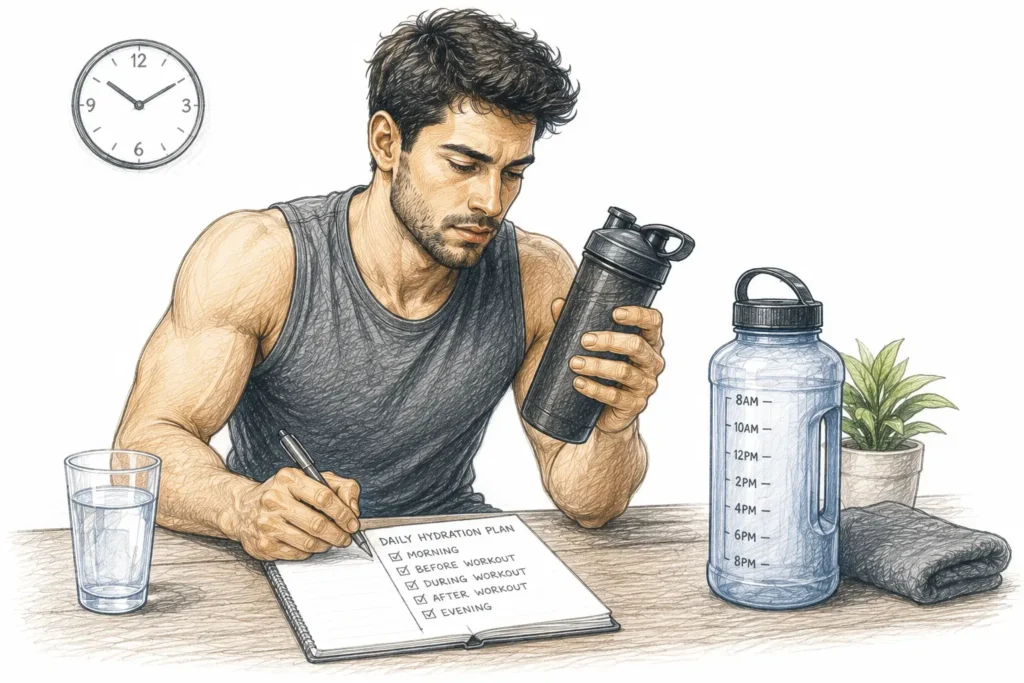
This routine works well for most people training regularly without needing to track every ounce of fluid obsessively.
- Drink a glass of water first thing in the morning before coffee or anything else
- Keep a water bottle nearby throughout the day rather than relying on feeling thirsty
- Drink a moderate amount of fluid in the two hours before training
- Sip water steadily throughout the workout rather than drinking large amounts all at once
- Rehydrate after training, paying extra attention on hot days or after unusually sweaty sessions
- Check urine color once or twice a day as a simple hydration gauge
- Adjust intake upward on hot days, travel days, or unusually intense training sessions
None of this needs to be complicated. Most people only need to fix one or two habits, like drinking water earlier in the day or sipping steadily during workouts, to notice a real difference in training quality. A small notebook or phone note tracking rough daily intake for a week or two can also reveal patterns most people never noticed before.
FAQs
Can dehydration really affect strength, or does it only matter for endurance sports?
Ans: Dehydration affects both. Even mild fluid loss can reduce blood volume and muscle force production, which impacts strength and power output, not just endurance performance.
How do I know if I am dehydrated during a workout?
Ans: Common signs include unusual fatigue, headache, dizziness, dry mouth, and dark yellow urine. Feeling thirsty already means mild dehydration has typically already begun.
Do I need a sports drink for every workout ? Hydration Affects Energy Strength
Ans: No, plain water is usually enough for sessions under about 45 to 60 minutes. Longer or more intense sessions, especially in heat, may benefit from added electrolytes.
Can drinking too much water actually hurt performance?
Ans: Yes, excessive water intake without electrolyte replacement during very long sessions can dilute blood sodium levels, though this mainly affects endurance athletes rather than typical gym sessions.
Why do I feel tired during workouts even though I do not feel thirsty? Thirst is a delayed signal, and mild dehydration can affect energy and focus before noticeable thirst kicks in, which is why fatigue can appear before thirst does.
Does hydration affect the numbers I see on the scale?
Ans: Yes, hydration status can shift body weight noticeably within a single day, which is why tracking your FFMI under consistent hydration conditions gives a clearer picture than daily scale weight alone.
How much water should I drink if I train regularly?
Ans: General guidelines suggest around 2.7 to 3.7 liters of total daily fluid for most adults, though active people training regularly, especially in hot conditions, often need more than that baseline.
Can caffeine or coffee count toward my daily fluid intake?
Ans: Moderate caffeine intake generally still contributes to overall hydration, though relying entirely on caffeinated drinks without any plain water is not an ideal long term strategy for most active people.